
Modern manufacturing demands unprecedented accuracy, where even the smallest deviation can mean the difference between perfection and failure in high-stakes industries.

🎯 The Revolution in Manufacturing Precision
The manufacturing landscape has undergone a dramatic transformation over the past few decades. What once required the steady hands of master craftsmen and countless hours of meticulous work can now be accomplished with breathtaking accuracy through advanced CNC (Computer Numerical Control) systems. These sophisticated machines have redefined what’s possible in precision manufacturing, pushing the boundaries from millimeter-level accuracy to micron-level perfection.
A micron, or micrometer, measures one-thousandth of a millimeter. To put this in perspective, a human hair is approximately 70 microns thick. When we discuss micron-level tolerances in CNC machining, we’re talking about achieving accuracy that’s nearly imperceptible to the human eye yet absolutely critical for modern applications in aerospace, medical devices, semiconductor manufacturing, and precision instrumentation.
Understanding Micron-Level Tolerance Requirements
Tolerance refers to the permissible variation in a dimension. In traditional manufacturing, tolerances might be measured in tenths or hundredths of a millimeter. However, cutting-edge CNC systems now routinely achieve tolerances of 5 microns or less, with some specialized systems reaching sub-micron accuracy of 0.5 microns or better.
This level of precision isn’t just impressive—it’s essential. Consider the aerospace industry, where turbine blades must be manufactured to exacting specifications to ensure optimal performance and safety at extreme temperatures and pressures. Or think about medical implants, where dimensional accuracy directly impacts biocompatibility and patient outcomes. In these applications, micron-level tolerances aren’t luxury specifications; they’re fundamental requirements.
Industries Demanding Ultra-Precision
- Aerospace and Defense: Turbine components, fuel injection systems, and critical structural elements
- Medical Device Manufacturing: Orthopedic implants, surgical instruments, and dental prosthetics
- Semiconductor Industry: Wafer processing equipment and precision tooling
- Automotive Performance: High-performance engine components and transmission parts
- Optics and Photonics: Lens mounts, mirror substrates, and laser components
- Scientific Instrumentation: Measurement devices and laboratory equipment
⚙️ The Technology Behind Micron-Level Precision
Achieving micron-level tolerances requires a perfect symphony of advanced technologies working in concert. Modern CNC systems integrate multiple sophisticated components, each contributing to the overall precision of the manufacturing process.
Advanced Motion Control Systems
At the heart of every precision CNC machine lies its motion control system. Traditional systems use stepper motors or basic servo motors, but micron-level precision demands ultra-high-resolution linear motors or precision ball screw systems with advanced feedback mechanisms. These systems can position tools with repeatability measured in fractions of a micron.
Linear encoders provide real-time position feedback with resolutions of 0.1 microns or better, allowing the control system to make instantaneous adjustments. Closed-loop servo systems continuously monitor and correct position, compensating for factors like thermal expansion, mechanical wear, and external vibrations.
Thermal Management and Environmental Control
Heat is one of the greatest enemies of precision manufacturing. A temperature change of just one degree Celsius can cause steel to expand or contract by approximately 11 microns per meter. For micron-level work, this is catastrophic.
Cutting-edge CNC facilities employ sophisticated thermal management strategies. Climate-controlled manufacturing environments maintain temperatures within ±0.5°C. Advanced machines feature temperature-compensated structures made from materials with low thermal expansion coefficients, such as granite, ceramic composites, or specially engineered metal alloys.
Some systems incorporate active thermal compensation, using temperature sensors throughout the machine structure to predict and correct for thermal drift in real-time. Others use thermal pre-stress techniques, running machines through heating cycles before precision work begins to achieve thermal stability.
🔬 Metrology Integration: Measuring at the Micron Scale
You cannot control what you cannot measure. This age-old manufacturing principle is particularly relevant in micron-level machining. Modern CNC systems integrate sophisticated metrology equipment that enables in-process measurement and verification.
In-Process Measurement Technologies
Touch probes mounted directly on CNC machines allow for automated part measurement without removing the workpiece from the machine. These probes can measure dimensions with accuracy of 1-2 microns, enabling automatic offset corrections and quality verification during the manufacturing process.
Non-contact laser measurement systems offer even greater precision, with some systems achieving sub-micron accuracy. These systems use interferometry or laser triangulation to measure part dimensions without physical contact, eliminating measurement force errors that can affect ultra-precise measurements.
Vision systems equipped with high-resolution cameras and advanced image processing algorithms can inspect features and verify dimensions at the micron level. These systems are particularly valuable for complex geometries and surface feature verification.
Material Considerations for Ultra-Precision Machining
Not all materials respond equally well to micron-level machining. Material properties significantly impact the achievable precision and surface finish quality.
Ideal Materials for Precision Work
Aluminum alloys are popular choices for precision applications due to their excellent machinability, low thermal expansion, and favorable strength-to-weight ratio. Specific alloys like 6061-T6 and 7075-T6 are particularly well-suited for micron-level work.
Stainless steels, despite being more challenging to machine, are frequently used when corrosion resistance is required. Austenitic grades like 316L can achieve excellent surface finishes and dimensional accuracy with proper tooling and cutting parameters.
Exotic materials like titanium alloys, Inconel, and other superalloys present unique challenges but are essential for aerospace and medical applications. These materials require specialized cutting strategies and tooling to achieve micron-level precision.
Material Stability Challenges
Internal stresses within materials can cause distortion when material is removed during machining. For micron-level work, stress-relieved materials are essential. Some manufacturers use cryogenic stress relief treatments or specialized heat treatment processes to ensure material stability.
Grain structure also affects precision machining. Materials with fine, uniform grain structures machine more predictably and can achieve better surface finishes than those with coarse or irregular grains.
🛠️ Tooling Strategies for Extreme Precision
The cutting tool is the final interface between the machine and the workpiece. No matter how precise the machine, poor tooling will compromise results. Micron-level machining requires exceptional attention to tool selection, preparation, and management.
Tool Selection and Preparation
Diamond-coated cutting tools offer superior wear resistance and can maintain sharp cutting edges far longer than conventional tools. For non-ferrous materials, polycrystalline diamond (PCD) tools provide exceptional performance and can achieve mirror-like surface finishes.
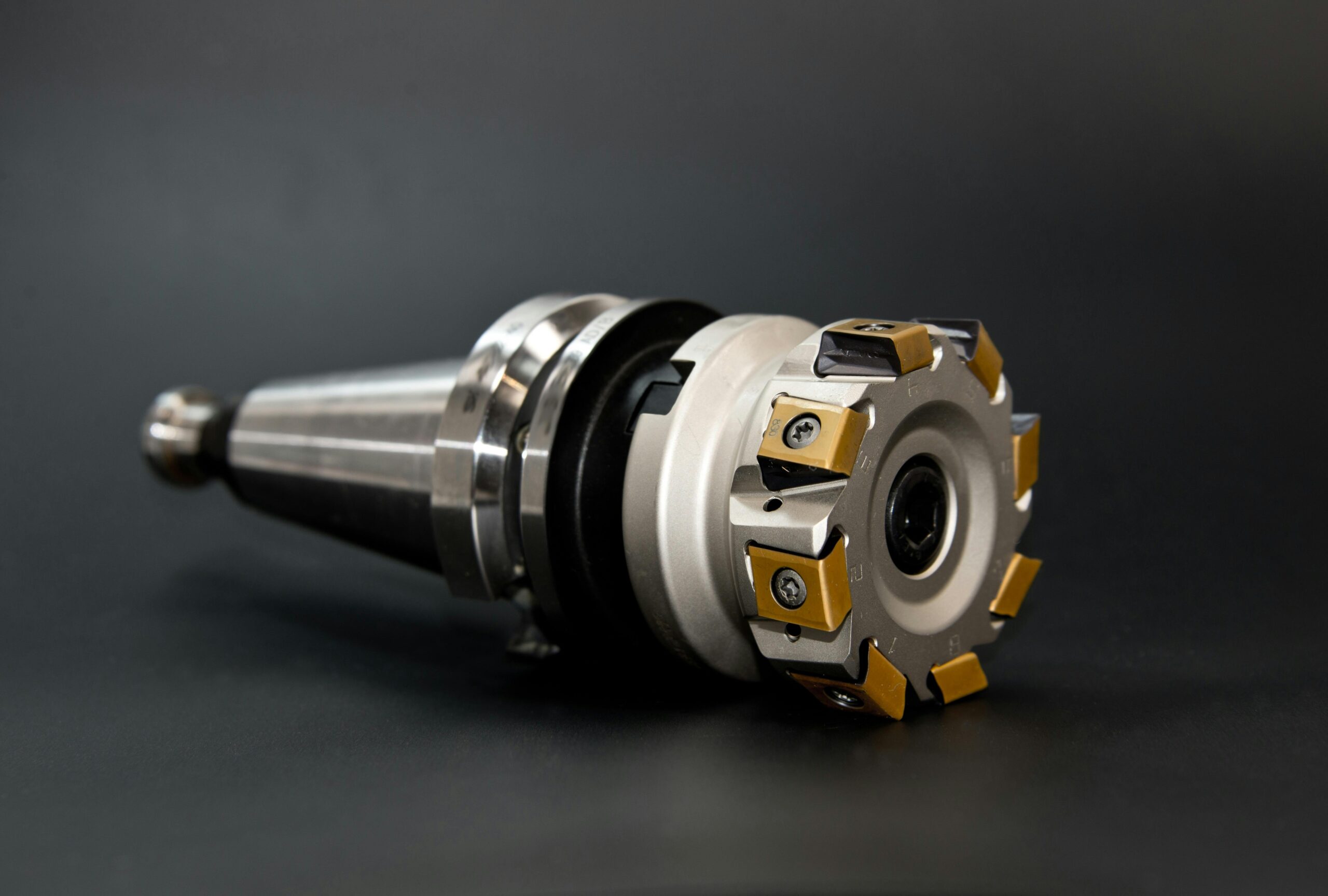
Tool runout—the wobble in a rotating tool—must be minimized to sub-micron levels. High-precision tool holders using hydraulic expansion, shrink-fit, or melt-bonding technologies can achieve runout of less than 1 micron at the tool tip.
Tool balancing becomes critical at high spindle speeds. Unbalanced tools create vibrations that destroy precision. G2.5 balance grade or better is typically required for precision work, with some applications demanding G1.0 or even G0.4 balance grades.
Programming and CAM Strategies for Precision
Advanced hardware means nothing without intelligent programming. Modern CAM (Computer-Aided Manufacturing) software plays a crucial role in achieving micron-level tolerances.
Adaptive Toolpath Generation
Constant engagement toolpaths maintain consistent cutting forces throughout the machining operation, reducing tool deflection and improving dimensional accuracy. Trochoidal milling, adaptive clearing, and other advanced strategies optimize material removal while maintaining precision.
Multi-axis simultaneous machining enables complex geometries to be cut without repositioning the part, eliminating cumulative positioning errors. Five-axis machining is particularly valuable for complex contoured surfaces requiring tight tolerances.
Simulation and Verification
Comprehensive simulation before cutting metal is non-negotiable for precision work. Modern CAM systems can simulate not just the cutting process but also predict deflection, thermal effects, and potential collision scenarios.
Virtual verification catches programming errors before they become expensive scrap parts. G-code simulation, machine simulation, and material removal simulation provide multiple layers of verification.
📊 Process Control and Quality Assurance
Achieving micron-level precision once is impressive. Maintaining that precision across hundreds or thousands of parts requires robust process control and quality systems.
Statistical Process Control Implementation
SPC (Statistical Process Control) techniques monitor process variations in real-time, enabling proactive corrections before parts drift out of specification. Control charts track critical dimensions, identifying trends that indicate tool wear, thermal drift, or other process changes.
| Measurement Frequency | Sample Size | Control Limit | Action Required |
|---|---|---|---|
| Every 5 parts | 1 part | ±3 microns | Trend monitoring |
| Every 25 parts | 3 parts | ±2 microns | Process adjustment check |
| End of shift | 5 parts | ±1.5 microns | Full capability study |
Automated Quality Documentation
Modern precision manufacturing generates enormous amounts of measurement data. Automated data collection systems capture dimensional data directly from measurement equipment, eliminating transcription errors and providing complete traceability.
Digital twin technology creates virtual representations of physical parts, comparing actual measurements against ideal CAD models to identify deviations and generate detailed inspection reports automatically.
🌡️ Environmental Factors and Vibration Control
The environment surrounding a CNC machine significantly impacts its ability to achieve micron-level precision. External vibrations, air currents, humidity, and other factors must be carefully controlled.
Vibration Isolation Systems
Precision machines require isolation from building vibrations, nearby equipment, and even foot traffic. Active vibration isolation systems use sensors and actuators to counteract vibrations in real-time, maintaining a stable platform for machining.
Passive isolation using pneumatic isolators or specially designed foundation systems can also be effective. Some facilities install precision machines on separate concrete pads isolated from the building structure to minimize vibration transmission.
Cleanroom Considerations
For the most demanding applications, cleanroom environments prevent airborne contaminants from affecting part surfaces or measurement accuracy. Temperature and humidity control in these environments is even more stringent than in standard precision manufacturing areas.
💡 The Human Element in Precision Manufacturing
Despite all the advanced technology, skilled operators and programmers remain essential. Understanding machine capabilities, recognizing subtle process changes, and making informed decisions about tooling and cutting parameters requires experience and expertise.
Training and Skill Development
Operators working with micron-level tolerance systems need comprehensive training not just in machine operation but in metrology, materials science, and quality systems. Understanding the “why” behind procedures is as important as knowing the “how.”
Continuous learning is essential as technology evolves. The best precision manufacturing facilities invest heavily in ongoing training, ensuring their teams stay current with the latest techniques, technologies, and best practices.
🚀 Future Trends in Ultra-Precision Manufacturing
The pursuit of ever-greater precision continues to drive innovation. Several emerging technologies promise to push the boundaries even further.
Artificial Intelligence and Machine Learning
AI systems are beginning to optimize cutting parameters in real-time, learning from previous operations to predict optimal settings for new parts. Machine learning algorithms can identify patterns in measurement data that humans might miss, enabling predictive maintenance and proactive quality management.
Adaptive control systems use AI to adjust cutting parameters during machining operations, compensating for tool wear, material variations, and other factors that affect precision.
Advanced Materials and Coatings
New cutting tool materials and coatings promise longer tool life and better precision. Nanostructured coatings provide superior hardness and wear resistance while maintaining sharp cutting edges.
Machine structure materials with near-zero thermal expansion are being developed, promising even greater thermal stability for precision equipment.
Investment Considerations for Precision CNC Systems
Acquiring cutting-edge CNC systems capable of micron-level tolerances represents a significant investment. Machines, tooling, measurement equipment, and facility modifications can easily exceed several hundred thousand dollars for a complete system.
However, the return on investment can be substantial. The ability to produce high-value precision components opens doors to premium markets and applications where competition is limited. Reduced scrap rates, faster cycle times, and improved quality all contribute to profitability.
When evaluating precision CNC systems, consider not just the initial purchase price but the total cost of ownership, including maintenance, tooling, training, and facility requirements. The most expensive machine isn’t always the best choice; matching capabilities to actual requirements ensures optimal investment.
🎓 Mastering the Art and Science of Precision
Achieving micron-level tolerances with CNC systems represents the pinnacle of modern manufacturing capability. It requires the perfect integration of advanced machinery, sophisticated software, precision tooling, environmental control, and skilled personnel.
Success in ultra-precision manufacturing isn’t about any single element but rather the harmonious coordination of all these factors. Machines must be properly specified, installed, and maintained. Programs must be carefully developed and verified. Tools must be selected, prepared, and managed with meticulous attention to detail. Environmental factors must be controlled, and quality systems must provide continuous feedback and verification.
Most importantly, the people operating these systems must understand not just the procedures but the underlying principles. They must be able to interpret measurement data, recognize process variations, and make informed decisions that maintain the precision their customers demand.
The journey to mastering micron-level tolerances is challenging but immensely rewarding. As manufacturing continues to evolve, with products becoming smaller, more complex, and more demanding, the ability to consistently deliver parts within micron-level tolerances will increasingly separate industry leaders from followers.
For manufacturers willing to make the necessary investments in technology, training, and processes, the opportunities are boundless. From medical devices that improve patient outcomes to aerospace components that enable more efficient aircraft, precision manufacturing at the micron level is literally shaping the future of technology and human advancement.